
Join Toni Mount as she shares the prologue from her latest gripping novel, The Colour of Malice, and also explains how she chooses the names of her medieval mystery novels.
[Read More...]
Join Toni Mount as she shares the prologue from her latest gripping novel, The Colour of Malice, and also explains how she chooses the names of her medieval mystery novels.
[Read More...]
Why did Henry VIII execute Robert Aske and Sir Robert Constable after granting them pardons for their involvement in the Pilgrimage of Grace?
In December 1536, Henry VIII promised to pardon the rebels who had taken part in the Pilgrimage of Grace, the great northern rebellion that had caused him so much trouble that autumn. Robert Aske, one of the rebellion’s principal leaders, was even invited to court, where he met the king and discussed the grievances of the people of the north. Yet, just seven months later, Aske was executed at York, and Sir Robert Constable, another prominent participant in the rebellion, was hanged in chains at Hull.
So what had happened to Henry VIII’s promise of mercy?
[Read More...]
Today we have a guest article from Roger Drexler who has been spending time researching Edward Seymour in advance of writing a new biography of this fascinating Tudor man.
Here, he's shared an article about Edward Seymour's first marriage. Take it away, Roger:
“Old Sir John is a man of notorious family feeling. Two, three years back, the gossip at court was all of
how he had tupped his son’s wife, not once in the heat of passion but repeatedly since she was a bride”.
“The traitor wife gave birth to two boys, and when her conduct came to light Edward said he would not
have them for his heirs, as he could not be sure if they were his sons or his half brothers. The adulteress
was locked up in a convent, and soon obliged him by dying…”
Hilary Mantel, Bring up the Bodies
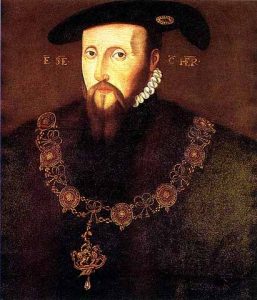 It has been whispered over the centuries that Edward Seymour, long before he became Duke of Somerset and Lord Protector of the Realm during the reign of his young nephew King Edward VI, repudiated his first wife Catherine Fillol, dissolved their marriage, and consequently banished her to a convent for the remainder of her days. The cause of her husband’s wrath was Catherine’s infidelity, more specifically, having conducted a lengthy affair with none other than her father-in-law, the steadfast royal servant Sir John Seymour. Unfortunately, if this disreputable saga of seduction and betrayal had truly befallen the family, none of the details can be proven with any degree of certainty.
In the award-winning historical novel Bring up the Bodies, the second volume in her trilogy depicting the life and machinations of King Henry VIII’s chief minister Thomas Cromwell, Hilary Mantel’s portrayal of Catherine Fillol as her father-in-law’s lover was surely an anecdote far too shocking and salacious to exclude from her book. As an author of historical fiction, sticking exclusively to established facts would be a needless constraint in weaving riveting plotlines and developing compelling characters and themes.
Mantel said in describing her approach to writing, “I track the historical record so I can report the outer world faithfully – though I also tell my reader the rumors”. Recounting the challenges she faced in conceptualizing her novels, Mantel revealed “what I wasn’t prepared for were the gaps, the erasures, the silences where there should have been evidence.” Fleshing out her stories with the rumors helped her overcome the limits imposed by verifiable deeds and events, allowing her “to start practicing my trade at the point where the satisfactions of the official story break down”.
Attempting to construct an accurate historical account, on the other hand, is complicated by the fact that if the affair and its acrimonious aftermath did occur, not a single identified contemporary letter, diary or eyewitness account makes reference to it. The record also fails to mention the slightest enmity between Edward and his father, nor is there any sign the scandal slowed the Seymour’s steady rise as royal favorites. King Henry paid Sir John and the family the great honor of visiting their ancestral home of Wolf Hall on his royal progress in 1535, and when the king’s own volatile marriage to his second queen Anne Boleyn soon began to unravel, his eye turned to Edwards’s sister Jane as his next bride, with Edward acting as his most trusted confidant in facilitating the blossoming romance.
Even had an illicit relationship been discovered, there were good reasons why word of this shameful episode was not widely circulated at the time. It is clear the ambitious Seymour clan would have a strong motivation to keep their predicament under wraps, and despite internal stresses would band together to protect their collective reputations and future prospects. The same would apply to respected country gentry like the Fillols, who would have no desire to allow the transgressions of a wayward daughter become public knowledge. If there was a concerted cover-up, it appears to have been remarkably successful. A family as aspiring and relentless as the Seymours inevitably had enemies and rivals who would look to exploit any indignity to damage one of their competitors in the zero-sum
game that was Tudor court politics. One foe was Arthur Plantagenet, Lord Lisle, who not long after the marriage had failed was involved in a bitter legal dispute with Edward over property in Somerset. Lisle wrote numerous letters to friends and allies airing his complaints, even petitioning the powerful Cromwell to support his claims. If armed with knowledge of the affair, it seems unlikely the aggrieved Lisle would have bypassed the opportunity to privately smear his adversary and sully the Seymour name.
Nonetheless, by piecing together the historical speculation and rumors with the circumstantial evidence, a plausible case can be made that Catherine and her father-in-law were guilty, or at least suspected, of adultery, and the allegations were serious enough to lead to the end of her marriage and ostracism from polite society.
Catherine was the daughter of Sir William Fillol, a well-respected and prosperous Dorset and Essex landowner. As a young girl of uncertain age, in a match orchestrated by her father and Sir John, she was betrothed to Edward, and by 1518 the two were married. Due to the prearranged nature of the wedding, there had likely been no courtship or falling in love, and while Catherine was sent to reside at Wolf Hall under the guardianship of her father-in-law, the newlyweds would not have lived together as man and wife until she came of age, which for Tudor-era girls was the early teenage years. While they were his wards, Sir John was responsible for supporting the couple with sufficient “meat, drink, learning and lodging”, and “apparel convenient to their degree”. In typical acquisitive Seymour fashion, the union held great promise, as Catherine and her sister were Sir William’s co-heirs and along with their husbands poised to inherit considerable manors and properties. On the surface all seemed to be going according to script, and though the timeline is vague, in due course Catherine gave birth to two sons.
From the beginning of the marriage, the serious-minded and driven Edward, as a rising courtier, was often absent from Wolf Hall and his wife. While Edward was away at university, court or overseas, the aging but still vigorous Sir John, now spending far less of his time attending the king as a Knight of the Body in London, was regularly in close proximity to his lonely and possibly flirtatious daughter-in-law. The charming and virile father of ten had already publicly recognized one illegitimate son by an unknown mother, and he may have looked upon Catherine with a covetous eye as she grew into an attractive young woman. If at some point they did abandon self-restraint and act on their amorous desires, we can only guess as to the timing and extent of the affair, or even if it were consensual from Catherine’s perspective. Wolf Hall manor, standing a mile outside of the Royal Forest of Savernake and centered on a large property of 1,270 acres including several gardens, parks and a large thatched roofed
barn, certainly would have offered the requisite hidden corners and secluded woods for forbidden lovers to conceal a long running liaison.
Whatever may or may not have unfolded, accusations of wrongdoing were not made until the seventeenth century, long after the protagonists had passed from the scene, when two obscure testimonials first refer to Edward Seymour as a cuckold, and his wife an adulterer. One is a fantastical tale by ecclesiastical writer Peter Heylyn from his History of the Reformation of the Church of England. Heylyn declared that while in France, Edward “did there acquaint himself with a learned man” who “let him see, by the help of some magical perspective”, what appeared to be “a gentleman of his acquaintance in a more familiar posture with his wife than was agreeable to the honor of either party”.
To this “diabolical illusion”, Edward is said “to have given so much credit that he did not only estrange himself from her society at coming home, but furnished his next wife with an excellent opportunity for pressing him to the disinheriting of his former children”.
The second clue, a short marginal note embedded in Vincent’s Baronage, a collection of genealogical history by the antiquarian Augustine Vincent, supports Heylyn’s underlying assertion and directly implicates Sir John. Written in Latin, the translation simply states that Catherine was “Repudiated because she was known by father after the wedding”. This “very curious anecdote” was delved into with great interest when discovered by the literary circle of the renowned eighteenth-century author and politician Horace Walpole, and has intrigued writers and scholars ever since. A possible source of the allegations was a vicious parliamentary dispute in 1604 involving the competing heirs of Edward’s two marriages. During a quarrel over “certain manors, lands and tenements”, between Edward’s son the Earl of Hertford and his grandson Sir Edward Seymour, many “sundry bitter terms of spleen and imputation, to themselves, and their ancestors, passed between them”. Included in the vitriol was Hertford’s claim
that “that John, the eldest son of all, was begotten while Edward was in France”.
Setting aside the authenticity of a French seer with clairvoyant powers or the dependability of a provocative marginal note that fascinated antiquarians with a taste for hearsay, something drastic did happen to the marriage, and the fallout was apparent. It seems that sometime before 1530 Catherine had been shut away in a convent, by 1535 Edward was remarried, and in 1540 through an Act of Parliament he disinherited his eldest son by Catherine. The most reliable piece of evidence indicating all was not well with the marriage was the altering of Sir William Fillol’s will, dated May 14, 1527. While an earlier version from 1519 had named Catherine co-executor, by 1527 Sir William was clearly finished with both his daughter and the Seymours, avowing that in regard to the inheritance of his estates “for many diverse causes and considerations”, neither “Catherine nor her heirs of her body nor Sir Edward Seymour her husband in any ways shall have any part or parcel”.
In his disappointment and anger Sir William was not completely indifferent to his daughter’s fate, and wanting to ensure she was well cared for agreed to pay her the then significant pension of forty pounds a year “as long as she shall live virtuously and abide in some honest house of religion of women to the pleasing of God”. Edward evidently had reason to take his father-in-law up on this offer, demonstrating the degree of his own dissatisfaction with his dubious bride. While it is feasible that Catherine of her own accord wished to take religious vows, convalesce from an illness, or the marriage had come undone for reasons other than adultery, it is clear the couple were soon separated and living apart.
Although he did not formally divorce Catherine, an untainted Edward was now left at liberty to refocus on what he did best, accumulating wealth and enhancing his standing at court. In 1530 he used his growing influence to have Sir William’s will invalidated by an Act of Parliament, on the grounds the old man was “having many sundry and inconstant fantasies in his latter days”. While it is possible Sir William had actually come unhinged, as he was also feuding with his other daughter, this scheme allowed Edward to control considerably more than his rightful share of the Fillol inheritance.
In 1535, after Catherine was believed to have died, Edward married his second wife, the domineering Anne Stanhope, in what proved to be a far more suitable and advantageous arrangement. Probably at her bidding he later disinherited his first son by Catherine and passed over the second in favor of his children by Anne. That Edward did not entirely exclude his youngest son from the line of succession may imply that he had discovered the duration of Catherine’s infidelity, and therefore only suspected the paternity of the eldest. Horace Walpole would write scoldingly of the “great injustice” that had been done “to the children of his first wife, in favor of those by his second”, yet over the years Edward continued to lend support to both boys, buying them clothing and providing for their education, as long as they stayed well out of sight of their disapproving stepmother, “a lady of a high mind and haughty undaunted spirit”.
Meanwhile, as Sir John’s status and reputation apparently remained unscathed, all traces of Catherine Fillol vanish from history following the amending of her father’s will in 1527. If indeed she had been secreted away in a “house of religion”, there behind the convent walls she presumably spent the rest of her days in needlework and prayer, living a chaste life with few if any visitors, and died in anonymity, silently taking with her to the grave the truth concerning her conduct and the demise of her ill-fated marriage. In the end, while Hilary Mantel’s fictionalized Queen Anne Boleyn in Bring Up the Bodies can take great pleasure in gossiping about the scandal and spreading the rumors at court, those endeavoring to decipher the “official story” are limited to a few tangential clues, after-the-fact accounts of questionable validity, and much room for musing and conjecture. This leaves us with more questions than answers, craving the discovery of some long-lost chronicle to pry open the door on this Seymour family drama, and shed a ray of light on what really transpired amongst them some five hundred years
ago.
Roger Drexler is a writer living in Chevy Chase, MD. He’s currently working on a biography of Edward
Seymour.
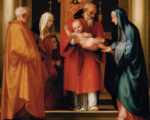
Happy Candlemas!
Yes, today is Candlemas, the Feast of the Presentation of Christ in the Temple and the Purification of the Blessed Virgin, and the feast that once marked the true end of Christmas.
Blessed candles, weather prophecies, guild pageants… and why the Tudors kept their decorations up until Candlemas Eve, and what happened if they left them up longer!…
History loves its heroes.
But it thrives on its villains.
From Richard III to Thomas Cromwell, Anne Boleyn to Henry VIII, Tudor history is crowded with figures branded as monsters, tyrants, schemers, and traitors.
But were they really villains?
My new online event, Tudor Villains, explores the men and women we love to hate, and asks:
Who decided they were “evil”?
What actually happened?
And what do their stories tell us about power, propaganda, and survival in Tudor England?
[Read More...]
On this day in Tudor history, 26th November 1542, Robert Radcliffe, 1st Earl of Sussex and Lord Great Chamberlain of England, died a natural death at Chelsea, no mean feat for a man who served King Henry VIII!
His father had been charged with treason, but Sussex rose to be a trusted royal insider. He navigated the Reformation, royal marriages, rebellions, and thrived…
[Read More...]
On this day in Tudor history, 25th November 1467, Thomas Dacre, 2nd Baron Dacre of Gilsland, was born in Cumberland.
Dacre would become one of the most powerful northern magnates of Tudor England, but he was also a soldier who helped bring the English to victory at Flodden, striking fear into the Scots with his war-cry, “A red bull! A red bull!”…
[Read More...]
On this day in Tudor history, 21st November 1558, just days after Elizabeth I’s accession, courtier James Bassett died at Blackfriars, London, aged just about thirty-two.
Bassett had been a devoted servant of both Queen Mary I and her husband, Philip of Spain, and he was a scholar, exile, courtier, and diplomat, as well as being the stepson of Arthur Plantagenet, Viscount Lisle, an illegitimate son of Edward IV.
[Read More...]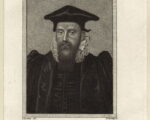
On this day in history, 19th November 1604, one of the most gifted churchmen of Elizabethan and early Jacobean England died. His name was Richard Edes, Dean of Worcester, royal chaplain, poet, playwright, and one of the scholars appointed to help translate the King James Bible.
Sadly, Edes never lived to take part in the work that would define English religious life for centuries, but he still led a remarkable life.
[Read More...]
On this day in Tudor history, 13 November 1537, Jane Seymour, third wife of King Henry VIII and mother of King Edward VI, was laid to rest in St George’s Chapel, Windsor Castle.
Jane had died on 24th October 1537, twelve days after giving birth to her son, plunging the court and kingdom into grief.
I talk about Jane’s final journey from Hampton Court Palace to Windsor, her funeral, and also how her remains were actually buried in TWO places…
[Read More...]
On this day in Tudor history, 12th November 1555, with the passing of the Second Statute of Repeal, Queen Mary I turned back the religious clock decades.
This Parliamentary act abolished every piece of legislation that had been passed against the Papacy since 1529, restoring papal authority and reuniting England with the Catholic Church of Rome once more.
One thing it didn’t change, though, was the English monarchs status as supreme head of the Church in England.
And what about the land and property granted or sold to nobles from the dissolution of the monasteries? What did Mary I do about that?
Let me tell you…
[Read More...]
On this day in Tudor history, 10th November 1565, Robert Devereux, 2nd Earl of Essex, was born.
This great-grandson of Mary Boleyn and stepson of Robert Dudley, Earl of Leicester, rose from ambitious courtier to Elizabeth I’s beloved favourite – charming, bold, and impossible to ignore. But his pride and defiance would destroy him.
In this video, I trace the rise and ruin of the queen’s “darling of her old age”: his dangerous ambition, his disastrous rebellion, and the shocking betrayal that ended with an axe on Tower Green.
[Read More...]
On this day in Tudor history, 7th November 1565, Sir Edward Warner, soldier, courtier, Member of Parliament, and twice Lieutenant of the Tower of London, died at his Norfolk home.
He fought in Scotland, helped defend Norwich during Kett’s Rebellion, and rose high under Edward VI, only to end up imprisoned after Mary I’s succession for siding with Queen Jane. Then, his compassion for the imprisoned Lady Katherine Grey, who got pregnant while he was gaoler to her and her husband, led to him being imprisoned once more.
Find out more about the life of this Tudor survivor…
[Read More...]
On this day in Tudor history, 4th November 1551, theologian, royal chaplain, and scholar John Redman, the first Master of Trinity College, Cambridge, died of consumption.
Redman was one of Tudor England’s most brilliant and balanced minds, a man who sought to reconcile faith, scholarship, and conscience in an age of division.
He served both Henry VIII and Edward VI, and tried to tread a middle way, defending traditional Catholic ideas while embracing elements of reform…
[Read More...]
On this day in Tudor history, 27th October 1526, Bishop Cuthbert Tunstall presided over a book burning at Paul’s Cross in London.
The goal was to stop heresy, and in order to do this, he’d ordered the buying of every copy of William Tyndale’s English translation of the New Testmant.
This censorship spectacularly backfired, though, as Tyndale used the money to pay for the printing of the improved second edition!
[Read More...]
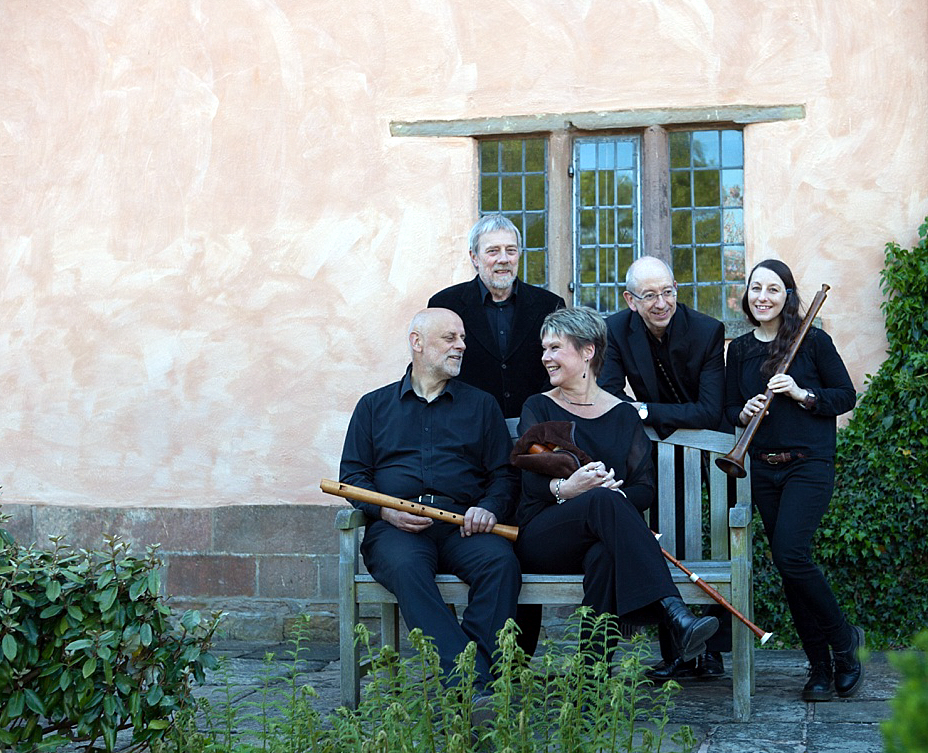 Christmas is coming ... which means that PIVA are busy preparing for their festive programme. As ever, they have a wonderful concert lined up, featuring many of PIVA’s yuletide favourites, all wrapped up with seasonal anecdotes and stories. There are just a few dates this year, and they hope you’ll be able to attend one of them.
They look forward to seeing you!
Friday, 28th November – Matlock Music Society, DE4 5NA 7.30pm start. Tickets £15.00, https://matlockmusic.org.uk/
Friday, 6th December – St Edward’s Church, Leek, ST13 5SB. 7.30pm start. Tickets £15.00, accompanied children free. https://wegottickets.com/
Saturday, 20th and Sunday, 21st December – Christmas Capers and Musical Mayhem at Little Moreton Hall, Congleton, Cheshire. Playing throughout the day at 11.30, 12.30, 1.30 and 2.30. A PIVA Christmas tradition – it wouldn’t be the same without a visit to our favourite historical venue! https://www.nationaltrust.org.uk
On this day in Tudor history, 23rd October 1538, Thomas Goldwell, prior of Christ Church, Canterbury, wrote to Thomas Cromwell, Henry VIII’s chief advisor and vicar general.
Goldwell was frightened. The world he knew was collapsing due to the king and Cromwell’s dissolution of the monasteries.
The prior begged to keep his “poor lodging” for life, adding the heartbreaking words: “I would rather die than live, if it were God’s pleasure.”
Goldwell’s letter shows us the human side of the Reformation.
Behind every confiscated abbey and looted shrine was a person left wondering how to live in a changed world.
On this day in Tudor history, 22nd October 1521, Sir Edward Poynings, soldier, administrator, and diplomat, died at his manor of Westenhanger in Kent.
He’s not a household name, but “Poynings’ Law” was quite a legacy. That law shaped Irish governance until the late 18th century
Poynings helped Henry VII restore royal control in Ireland, hunted pirates off the Flemish coast, and later steered diplomacy for Henry VIII…
[Read More...]
On this day in Tudor history, 21st October 1554, John Dudley, 2nd Earl of Warwick, died at Penshurst in Kent, the home of his brother-in-law, where he was under house arrest.
Warwick had only just been released from the Tower of London.
He was the son of John Dudley, Duke of Northumberland, and brother of Guildford Dudley, both of whom were executed for their parts in the succession crisis of 1553, which saw Guildford’s wife, Lady Jane Grey, becoming queen for thirteen days.
Find out more about Warwick, whose rise had seem assured until that July…
[Read More...]
Step into the shadows of history this Halloween and discover the haunted secrets of Hever Castle, once the childhood home of Anne Boleyn.
Join Messrs Watts, Moses and Cavendish as they lead you through a theatrical night of ghostly investigation and Victorian mystery. Together, you’ll venture beyond the veil between the living and the dead — exploring rarely seen corners of the Castle in search of spirits that may still linger there.
Your eerie evening begins at the Moat Restaurant, where you’ll meet your hosts before a lantern-lit walk along the Topiary Walk to the Castle Courtyard. Once inside, you’ll wander through the most atmospheric rooms of Hever Castle — familiar yet transformed — as haunting stories and spine-tingling surprises unfold.
Watch in wonder as a Victorian séance takes place before your very eyes. Are the spirits truly with you, or are you witnessing clever illusion? Only you can decide.
Blending favourite moments from last year’s experience with new, chilling twists for 2025, this immersive event promises to thrill both first-time visitors and returning ghost-hunters.
Each ticket includes a complimentary glass of Prosecco (or soft drink alternative) to steady your nerves before your journey into the unknown.
[Read More...]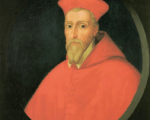
On this day in Tudor history, 16th October 1594, in the reign of Queen Elizabeth I, Cardinal William Allen died in exile in Rome.
To English Catholics, he was the shepherd who kept the old faith alive by founding colleges abroad that sent missionary priests back to England. To Elizabeth I’s government, he was a traitor who conspired with England’s enemies.
Allen even supported a Spanish invasion in 1588, the Spanish Armada, and readied himself to return to England when Elizabeth was deposed, seeing the queen as a heretic and usurper.
Find out more about him and decide for yourself whether he was a man of faith, a traitor, or both.
[Read More...]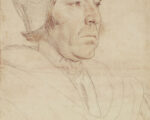
On this day in Tudor history, 15th October 1542, William Fitzwilliam, Earl of Southampton, died on campaign at Newcastle-upon-Tyne, serving Henry VIII one last time.
Southampton had been by the king’s side since childhood, when he’d been placed in Prince Henry’s household. He grew up to become a soldier, sailor, ambassador, and royal enforcer.
From being injured in a naval strike in 1512, to helping with the organisation of the Field of Cloth of Gold, and being involved in the falls of Wolsey, Anne Boleyn, Cromwell and Catherine Howard, Fitzwilliam’s career ran through the heart of Tudor power.
[Read More...]
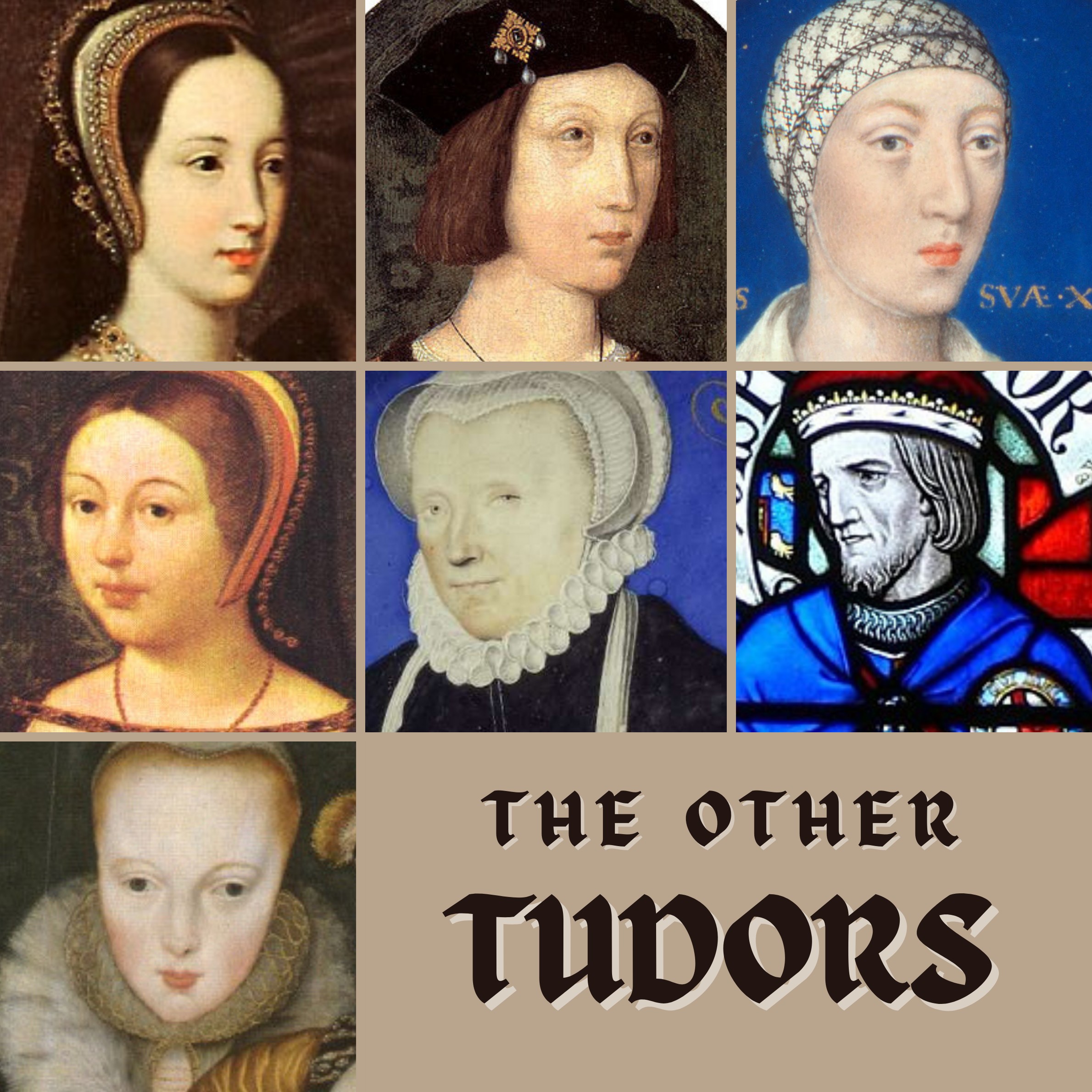 My forthcoming online event is now open for registration with an early bird discount. Here are all the details...
The Other Tudors: The Forgotten Figures Who Shaped a Dynasty
A Nine-Day Online Event: 7–15 December 2025
Early Bird Price: $129 until 17 October — Save $50 with code EBOTUDORS
Click here to register now!
History remembers Henry VIII, his six wives, and Elizabeth I, but what about the others?
This December, join me and a team of expert historians for a nine-day online journey into the lives of the forgotten Tudors — those whose stories are rarely told but who helped shape one of England’s most fascinating dynasties.
From the Welsh founders of the Tudor line to the tragic Grey sisters, these men and women lived in the shadow of power, yet their choices, ambitions, and fates changed the course of English history.
Over nine days, we’ll uncover the stories of these often neglected people:
From 18 October, the full price will be $179, so don’t wait — secure your spot today and join us for this unforgettable exploration of Tudor lives, legacies, and intrigue.
Click here to register now!
On this day in Tudor history, 10th October 1530, 2nd Marquess of Dorset, magnate, soldier, jouster, court insider, and Lady Jane Grey’s grandfather, died. He was buried at at Astley Collegiate Church in Warwickshire.
He was a well-connected man – his grandmothers were Elizabeth Woodville and Catherine Neville, sister of “The Kingmaker”, and at his death, he was one of the richest men in England.
Find out more about the man imprisoned by Henry VII, but released by Henry VIII…
[Read More...]
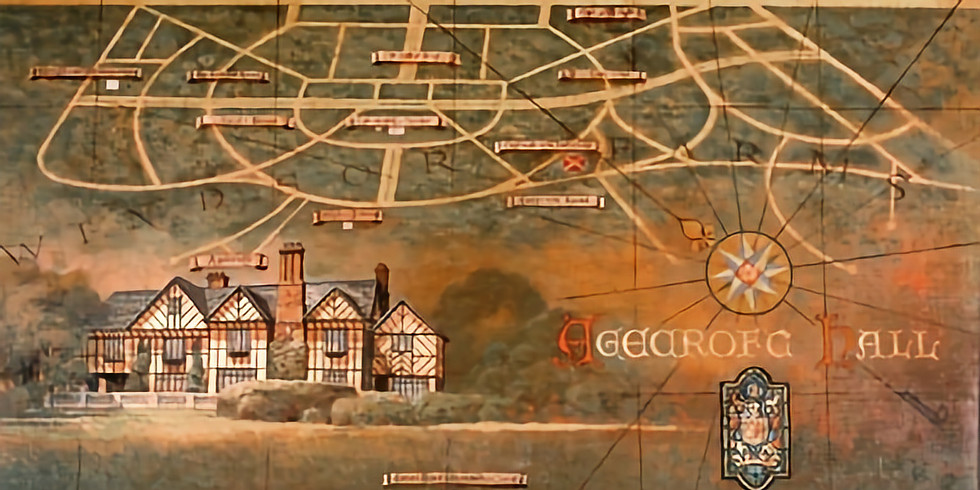
Agecroft Hall & Gardens invites visitors to enjoy the beauty of autumn with Pay-What-You-Will Plein Air Mornings, part of CultureWorks’ “artoberVA” program. These outdoor art sessions continue on Thursday, October 23rd and October 30th from 9am to 12pm. Guests can relax in the tranquil gardens, paint or sketch the Tudor-style manor, and take inspiration from the stunning scenery. (Click the date links to learn more and register!)
In addition, visitors are encouraged to mark their calendars for Agecroft Hall’s annual holiday open house, Yuletides, taking place on December 14th — a beloved Richmond tradition that celebrates the warmth and charm of an English Christmas.
Date: Saturday, October 11th
Time: 10:00am – 11:30am
Cost: $10 per person
Architecture and history enthusiasts are invited to join architectural historian Chris Novelli for the Windsor Walk, a fascinating walking tour of Richmond’s historic Windsor Farms neighborhood. The tour explores the history and architecture surrounding Agecroft Hall, Richmond’s iconic Tudor manor house.
Developed in the mid-1920s under the vision of T.C. Williams, Jr., the owner of Agecroft Hall, Windsor Farms was conceived as Richmond’s first comprehensively planned community. Inspired by English country villages, the neighborhood blends traditional charm with the convenience of modern city living. Many of its homes borrow architectural details from the Tudor and Colonial eras, and several were designed in collaboration with renowned 20th-century architects such as William Lawrence Bottomley.
This guided tour offers a rare opportunity to step back in time and discover how English design influenced one of Richmond’s most distinctive residential areas.
Please note: In the event of inclement weather, the Windsor Walk will be cancelled.
From artistic mornings in the garden to architectural tours through Windsor Farms, Agecroft Hall & Gardens offers countless ways to explore Richmond’s English heritage. Visitors can enjoy art, history, architecture, and the beauty of the outdoors — all in one unforgettable setting.
For event details, registration links, or general information about Agecroft Hall, visit the official website and plan your next visit today.
On this day in Tudor history, 8th October 1549, Edward Seymour, Duke of Somerset and Lord Protector, woke up the most powerful man in Tudor England and went to bed a denounced traitor.
Somerset had ruled as king in all but name since February 1547, leading his nephew King Edward VI’s government.
He pushed bold reforms (the Act of Uniformity and the Book of Common Prayer), but rebellion, rivalry, and ambition brought him down. On 8 October 1549, the Privy Council branded Somerset a traitor. By the 11th, he had surrendered. Within days, he was in the Tower; his protectorate abolished.
Find out more, and how this wasn’t actually the end of Somerset…
[Read More...]
On this day in Tudor history, 7th October 1589, William Hawkins, died.
He’s not as famous as his brother, Sir John Hawkins, but let me tell you more about this merchant, sea captain and three-time mayor of Plymouth…
[Read More...]
n my latest historian/author interview for my youtube channel, I’m joined by historian Elizabeth Norton to talk about her new book Women Who Ruled the World: 5000 Years of Female Monarchy. We cover how she chose her rulers, the thorny language of “queen” vs “female king”, why so many societies accepted women only in crises, and the single pattern she kept seeing across five millennia.
[Read More...]
In my latest interview on YouTube, I chat with historical novelist Wendy Johnson about her debut novel, “The Traitor’s Son”, her involvement in the “Looking for Richard” project, and her thoughts on the infamous Richard III.
We explore:
What being close to the 2012 discovery in Leicester changed for her as a writer and Ricardian
Why start with boyhood, and what newcomers should unlearn about Richard
Fact vs fiction: where the record ends and imagination begins
Favourite sources for Edward, George, and Richard
Places that shaped the story: Ludlow, Middleham, London
Teasers for Books 2 & 3 in the trilogy
Plus: Wendy’s top Ricardian must-visit sites, the scene she’d film first, and one non-fiction pick to read next.
King Henry VIII broke from Rome, dissolved the monasteries, and declared himself Supreme Head of the Church in England, so he was a Protestant, wasn’t he?
Not quite.
In this video, we explore:
Why Henry VIII broke with the Pope, and it wasn’t about theology
His 1521 book defending the Catholic sacraments against Martin Luther
The Act of Supremacy and what it really meant
The Six Articles and the continued persecution of Protestants
What changed under Henry—and what stayed Catholic
The king’s final days and the beliefs he clung to on his deathbed